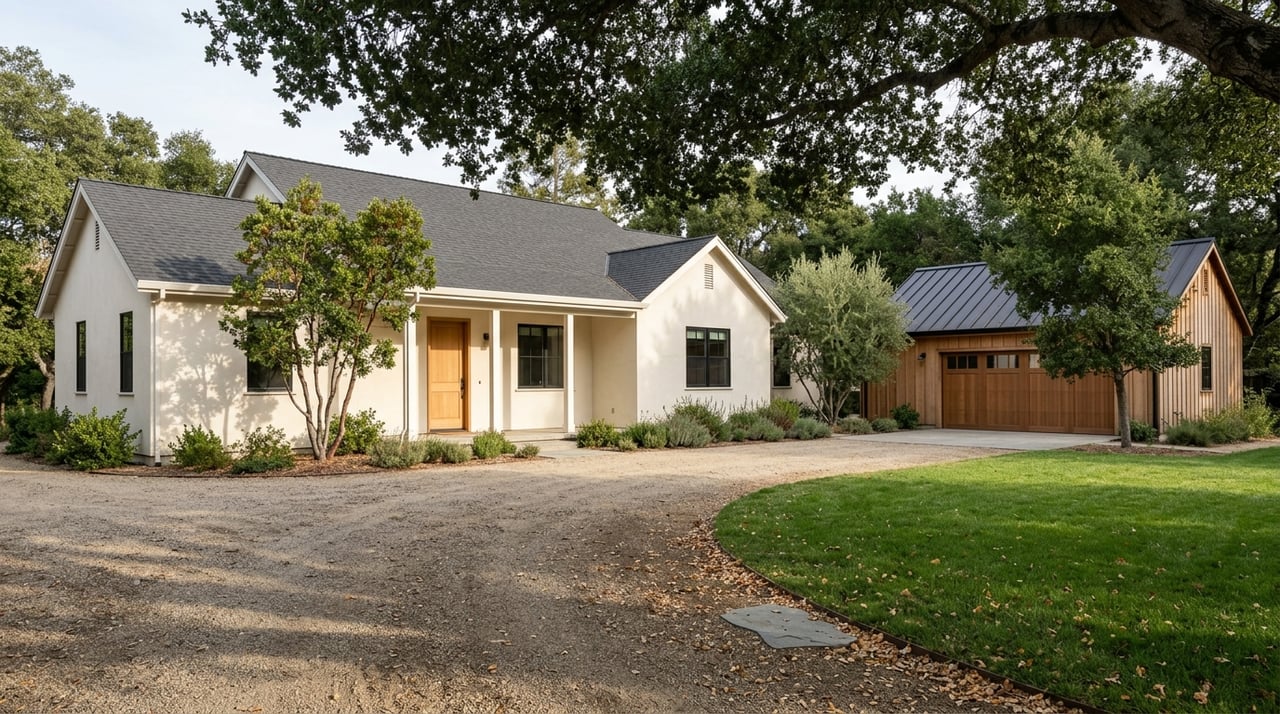
Selling a Home in Penngrove’s Country Market
April 23, 2026
April 23, 2026
If you are selling in Penngrove, you are not stepping into a typical Sonoma County market. Buyers here often look beyond bedroom count and square footage and focus just as much on land, privacy, access, and the real function of the property. That can create great opportunity, but it also means your pricing, prep, and marketing need to be more precise. This guide will walk you through what to expect when selling a home in Penngrove’s country market and how to position your property clearly and credibly. Let’s dive in.
Penngrove is a small Sonoma County community with a compact Main Street core, located just east of Highway 101. Sonoma County Tourism describes Penngrove as a small, bucolic place, which helps explain why many buyers come here looking for space, privacy, and a quieter setting.
That setting matters when it is time to sell. According to BAREIS year-end 2025 data, Penngrove posted a median sale price of $1.34 million across 33 residential sales, compared with Sonoma County’s $799,000 median. Average days on market were 59 in Penngrove and 62 countywide, which shows that Penngrove does not simply track with the broader county.
For you as a seller, that means county averages are only a starting point. In Penngrove, value often depends on the full property package, including acreage, usable outdoor areas, privacy, outbuildings, access, and overall condition.
In a country-style market, buyers want to understand how the property lives day to day. The National Association of Realtors 2025 buyer trends report found that neighborhood quality remains a major priority, and 17% of buyers said larger lots or acreage were important.
In Penngrove, that usually means buyers pay close attention to whether land is actually usable. A large parcel may sound impressive, but buyers will still want to know if there is flat space, fenced space, garden area, room for equipment, outdoor gathering areas, or practical separation between the home and neighboring properties.
Garages, workshops, barns, art studios, pool houses, and similar detached structures can be a major selling point. Sonoma County’s Permit Sonoma accessory-structure guidance makes clear that these structures are part of the normal residential landscape, but they must still comply with building, zoning, and septic rules.
That is why accuracy matters so much in listing preparation. If an outbuilding includes features like a kitchen, bedroom, or full bath, the county may treat it differently than a basic workshop or storage building. The safest and strongest approach is to describe each structure for what it is, note permit status when available, and avoid overstating possible uses.
In a neighborhood with many similar homes, pricing can lean heavily on recent comparable sales. Penngrove is different because properties are often more unique. Two homes with similar square footage may land in very different price ranges depending on lot usability, privacy, improvements, access, and the condition or legality of accessory structures.
That does not mean comps do not matter. They absolutely do. It means the right pricing strategy needs to interpret the comps in context rather than apply a broad county-level formula.
A strong pricing conversation in Penngrove usually looks at:
This is where a local, property-specific approach becomes important. In a smaller market, buyers can be very value-conscious, and overpricing a unique property can cost time and momentum.
In Sonoma County, wildfire readiness is not a side issue. Permit Sonoma’s wildfire resilience guidance recommends a house-out, landscape-in approach to defensible space, starting within five feet of the home and extending to 100 feet or the property line. Penngrove-Rancho Adobe is also one of the county’s initial project areas, which makes this especially relevant locally.
For sellers, this affects more than safety. Clean access roads, maintained vegetation, driveway visibility, and general defensible-space upkeep can influence how buyers feel about the property from the start. These details may also shape how smoothly inspections and disclosures go.
County materials also note that wildfire hazard maps can affect disclosure and, in some cases, development standards tied to access, water supply, signage, and exterior materials. You can review that context through Permit Sonoma’s wildfire hazard map update information.
Country properties often come with a longer paper trail. The California Department of Real Estate explains that the Transfer Disclosure Statement and Natural Hazard Disclosure remain central parts of the sale process, and as of 2025, the NHD also indicates whether a property is in a high fire hazard severity zone and whether it falls in a State Responsibility Area or Local Responsibility Area.
The same DRE guidance notes that sellers who took title within the previous 18 months must disclose certain contractor-performed additions, structural modifications, alterations, or repairs over $500 and provide contractor names and permit copies. If your property has had recent work, gathering this information early can save time and reduce stress later.
If your home was built before 1978, federal lead-based paint disclosure requirements also apply. For older Penngrove homes, that makes document prep especially important because buyers will want a clear picture of both condition and compliance.
If you need to do work before listing, California’s Contractors State License Board advises homeowners to use licensed contractors and verify license and insurance status. That is especially relevant in Penngrove, where pre-listing work may involve fencing, tree trimming, grading, roof repairs, or updates to detached structures.
Because this kind of prep can take time, many Penngrove sellers benefit from starting months before the target list date rather than only a few weeks ahead. That gives you more room to prioritize the work that supports both marketability and clean disclosure.
In Penngrove, online presentation needs to answer practical questions quickly. Buyers are not just scrolling for pretty interior photos. They want to understand the setting, access, and what the land actually offers.
That usually means the most useful visuals include wide exterior shots, driveway and access views, aerial context, and separate photos of each outbuilding or functional area. This approach aligns with buyer interest in larger lots and with Sonoma County’s emphasis on access and defensible space.
A vague lifestyle pitch will only go so far in a property-specific market. Stronger listing copy explains what is there in plain terms: flat usable area, fenced yard, room for equipment, storage building, garden space, hobby workspace, or guest parking.
That kind of clarity helps attract the right buyers and reduces confusion later. It also builds trust because buyers can tell when a listing is trying to inform them rather than oversell them.
Penngrove’s setting appeals to buyers who want a quieter, country feel, but convenience still matters. Because Penngrove sits just east of Highway 101 with a compact village core, many buyers will care about that balance between space and practical access.
When your listing presentation explains both the property and the setting clearly, it becomes easier for buyers to understand why the home stands apart from more in-town options nearby.
Most serious Penngrove buyers will move beyond first impressions quickly. They tend to ask direct, practical questions, especially when the property includes land or detached structures.
Expect questions like these:
The more clearly you can answer these questions before the home hits the market, the stronger your position will be. In many cases, good preparation helps prevent pricing objections, inspection surprises, and avoidable negotiation friction.
Selling in Penngrove often takes a more tailored approach than selling a standard subdivision home. You should expect the process to involve deeper property review, more upfront document gathering, and a sharper focus on how the land and improvements are presented.
You should also expect buyers to compare your property on more than style alone. They may weigh the house, lot function, privacy, access, wildfire readiness, and the credibility of the listing information all at once.
That is why concierge-level preparation can make a real difference here. With the right strategy, your sale is not just about listing the home. It is about telling the truth of the property well, supporting that story with documentation, and presenting everything in a polished, easy-to-understand way online and in person.
If you are thinking about selling in Penngrove, working with a local agent who understands these micro-market details can help you price more accurately, prepare more efficiently, and market the property with the kind of clarity buyers expect. To talk through timing, positioning, and next steps, connect with Tim McKee.
Stay up to date on the latest real estate trends.
From community events to your closing day, Tim McKee brings unmatched energy, care, and savvy to every interaction. Expect timely communication, strong advocacy, and results that align with your goals.